
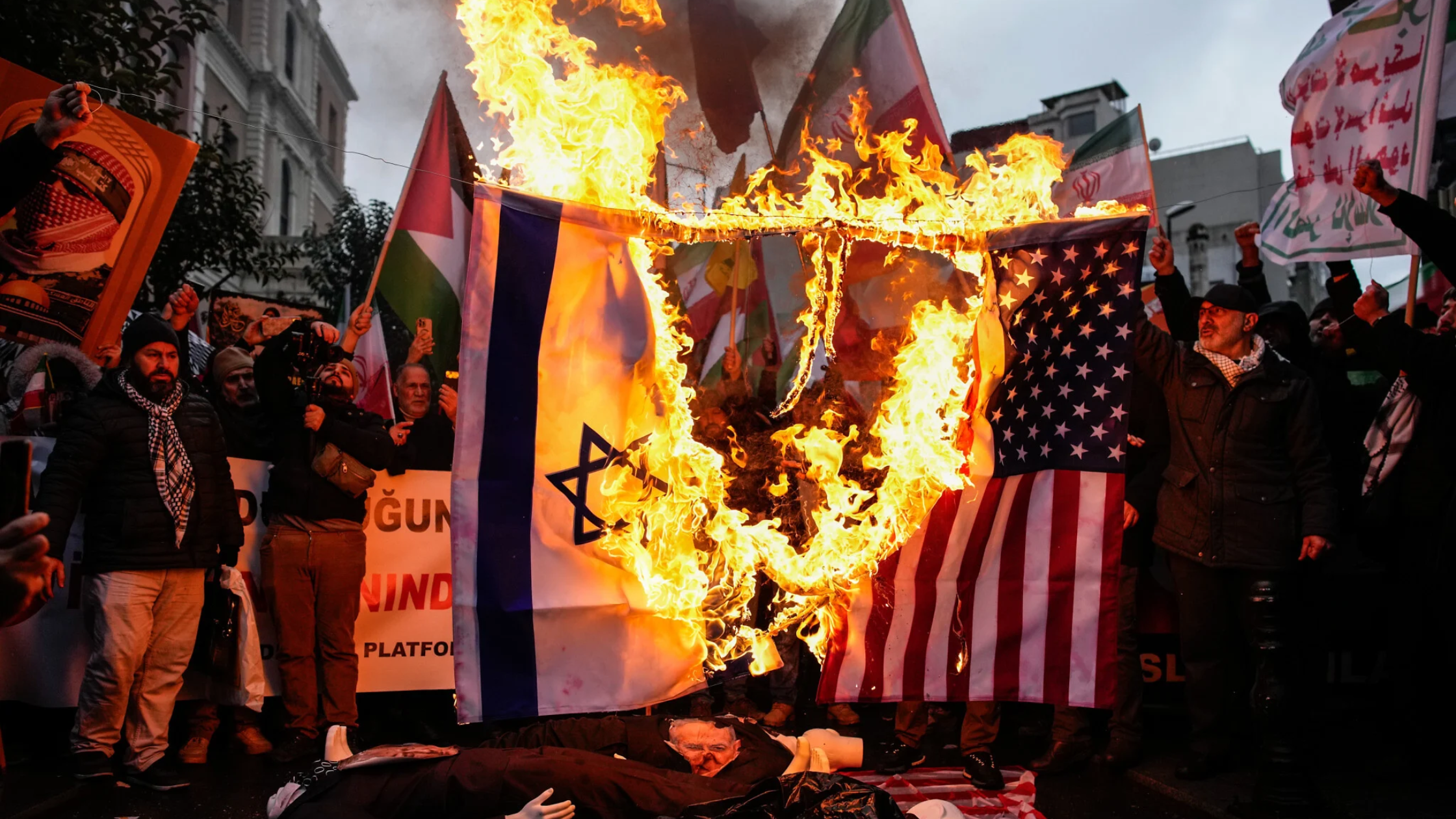
Pro-Khamenei protests in Iran escalated sharply this week as thousands of demonstrators loyal to Supreme Leader Ayatollah Ali Khamenei took to the streets and gathered outside diplomatic missions abroad, burning American and Israeli flags and accusing foreign powers of inciting violence and instability across the country.
The demonstrations, held amid continuing nationwide unrest, were marked by strong anti-Western rhetoric, with protesters blaming former US President Donald Trump and Israeli Prime Minister Benjamin Netanyahu for fueling the crisis through political pressure, sanctions, and public statements perceived as hostile to Iran’s leadership.
Flag-Burning Rallies and Anti-Western Slogans
Protesters waved portraits of Ayatollah Khamenei and Iran’s revolutionary founder, Ayatollah Ruhollah Khomeini, while chanting slogans against the United States and Israel. In several locations, demonstrators set fire to US and Israeli flags, scenes widely broadcast by Iranian state media as symbols of resistance to what Tehran describes as foreign interference.
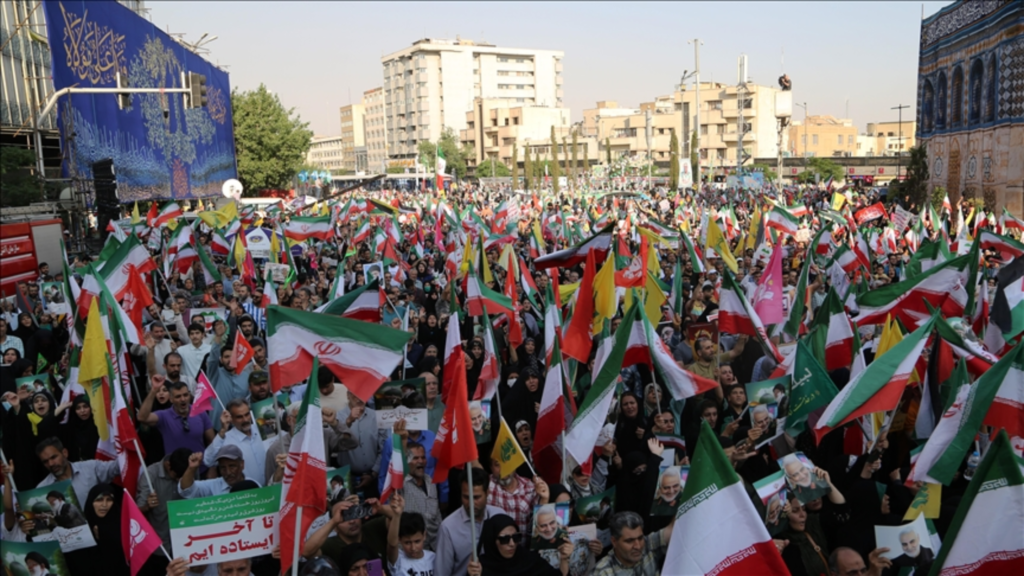
Organisers of the rallies accused Washington and Tel Aviv of exploiting internal challenges in Iran to weaken the Islamic Republic. Speakers at the events alleged that calls for regime change and support for opposition movements from abroad had emboldened violent protests and contributed to clashes between demonstrators and security forces.
A Show of Loyalty to Iran’s Supreme Leader
The pro-Khamenei protests in Iran were framed by authorities as spontaneous displays of national unity and loyalty to the country’s leadership. Supporters of the regime said the rallies were meant to counter what they see as a narrative pushed by foreign governments and international media portraying Iran as isolated and unstable.
State-aligned commentators described the demonstrations as evidence that a significant segment of Iranian society continues to back the Islamic Republic and rejects outside pressure. Protesters warned that any direct threat to Ayatollah Khamenei or Iran’s political system would be treated as an act of aggression, echoing recent statements by senior Iranian officials.
Blaming Sanctions and External Pressure
A central theme of the pro-Khamenei protests in Iran has been anger over economic sanctions imposed by the United States and its allies. Demonstrators argued that years of sanctions have hurt ordinary Iranians, increased inflation and unemployment, and contributed to public frustration—conditions they say foreign powers now seek to exploit.
Placards and speeches at the rallies accused the US of waging “economic warfare” and Israel of pushing for confrontation in the region. Protest leaders claimed that Western governments were attempting to turn Iran’s internal challenges into a broader geopolitical crisis.
Regional and Global Implications
The demonstrations come at a time of heightened tension in West Asia, with conflicts and diplomatic rifts reshaping regional alliances. Analysts say the pro-Khamenei protests in Iran serve multiple purposes: reinforcing domestic support for the leadership, sending a warning to external adversaries, and shaping international perceptions of the unrest.
While critics argue that the rallies are encouraged or organized by state institutions, supporters insist they reflect genuine public sentiment among Iranians who fear foreign intervention more than domestic instability. The flag burnings and fiery speeches, they say, are symbolic acts aimed at asserting sovereignty rather than calls for escalation.
Deepening Polarisation Inside Iran
The latest pro-Khamenei protests in Iran also highlight the deep divisions within Iranian society. While government supporters rally behind the supreme leader, opposition groups continue to demand political reform, greater freedoms, and accountability from those in power.
Human rights organizations have expressed concern over the ongoing crackdown on dissent, while Iranian officials maintain that security measures are necessary to prevent chaos and foreign-backed sabotage. This widening gap between opposing camps has raised fears of prolonged unrest and further international isolation.
Uncertain Road Ahead
As Iran navigates one of its most challenging periods in recent years, the pro-Khamenei protests in Iran underscore how the government is seeking to rally support by framing the crisis as a struggle against external enemies. Whether these demonstrations will succeed in stabilizing the situation or further inflame tensions remains unclear.
What is evident is that Iran’s internal unrest has become inseparable from its foreign policy battles. With protesters on one side blaming foreign powers and critics on the other calling for systemic change, the country faces a complex and uncertain path forward—one that will continue to draw intense regional and global attention.