
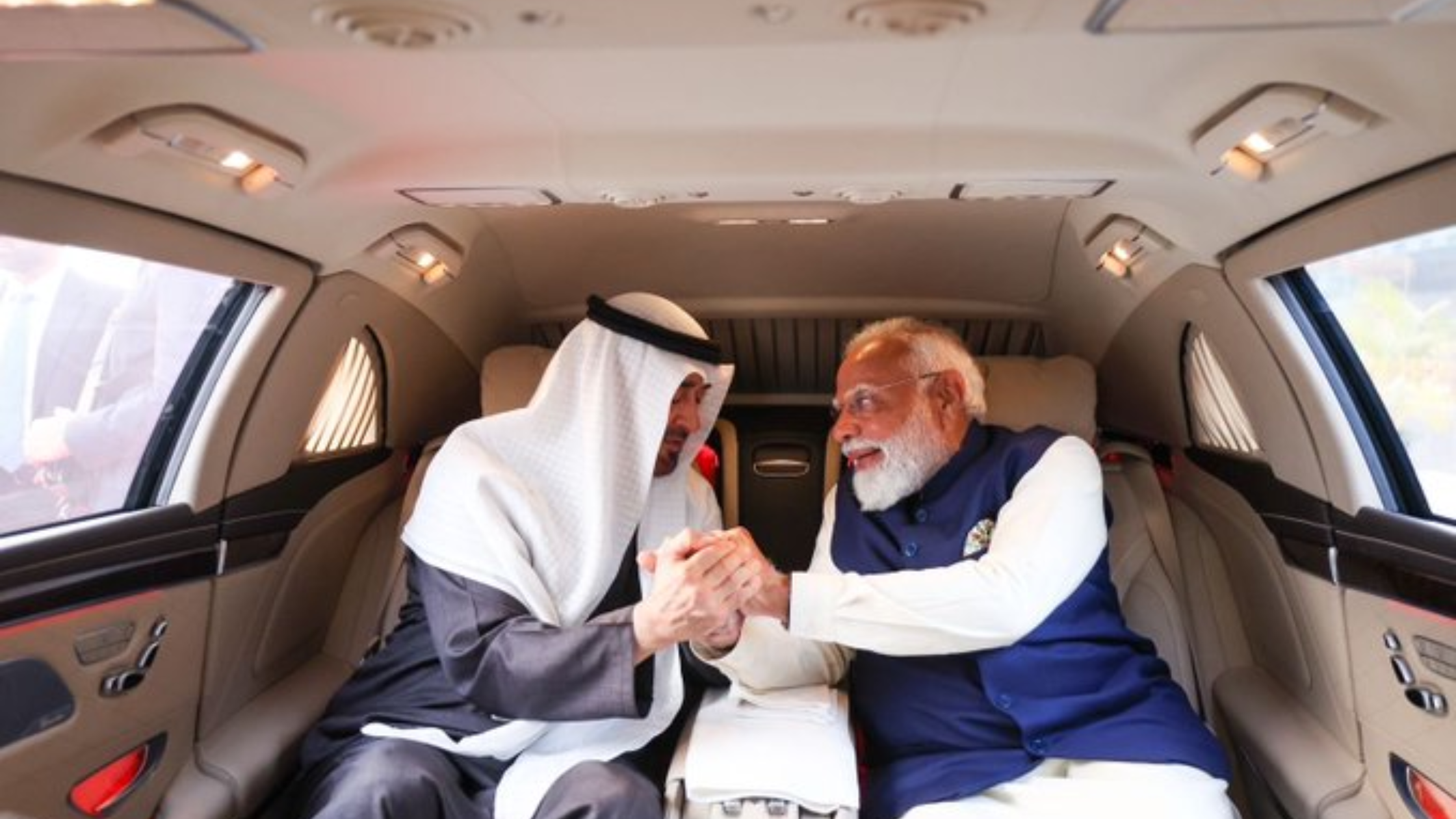
The India-UAE strategic partnership received a major boost on Monday as Prime Minister Narendra Modi and UAE President Sheikh Mohamed bin Zayed Al Nahyan held wide-ranging talks during a brief three-hour visit to New Delhi, fast-tracking cooperation in defense, energy, nuclear power, trade, technology, and space.
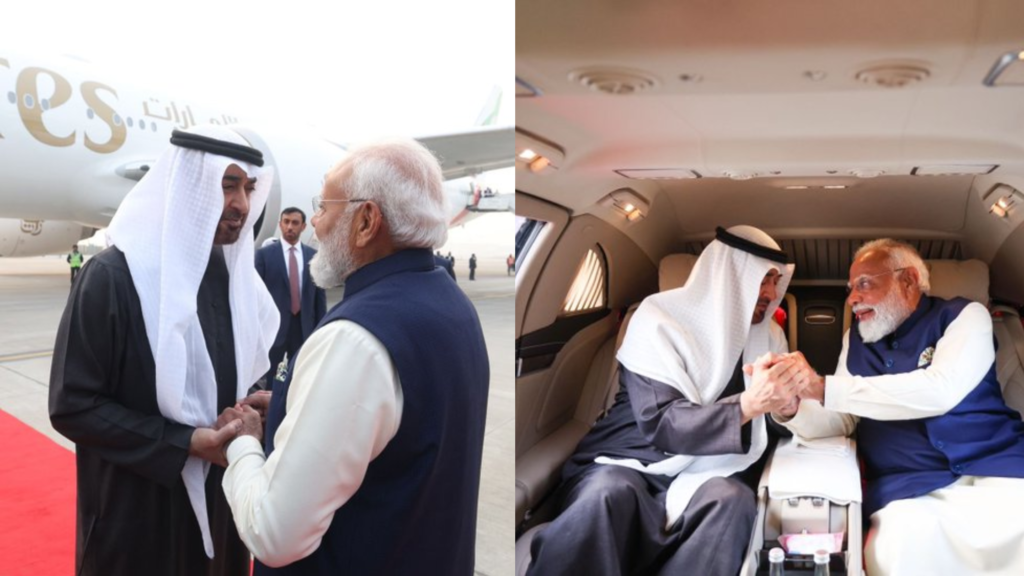
The two leaders set a bold target to double bilateral trade to $200 billion by 2032, reflecting the growing depth of economic and strategic ties between India and the United Arab Emirates.
Modi personally received Sheikh Mohamed bin Zayed—popularly known as MBZ—on his arrival, underlining the importance India attaches to the India-UAE strategic partnership and the UAE’s role as a key energy supplier and home to nearly 4.5 million Indians.
Defence Cooperation Becomes a Core Pillar of India-UAE Strategic Partnership
A key outcome of the talks was the signing of a letter of intent for a strategic defense partnership framework agreement, aimed at expanding cooperation in defense industrial collaboration, innovation, cybersecurity, counter-terrorism, special forces training, and interoperability.
Foreign Secretary Vikram Misri said the agreement represents a natural evolution of existing defense ties and is not linked to recent security developments in West Asia. Both sides reaffirmed the importance of strategic autonomy and described defense cooperation as a core pillar of the India-UAE strategic partnership.
Energy and Nuclear Collaboration Deepens
Energy cooperation featured prominently, with India and the UAE finalizing a 10-year LNG supply agreement under which Hindustan Petroleum Corporation Limited (HPCL) will import 0.5 million tonnes of LNG annually from ADNOC Gas starting in 2028.
In a significant expansion of the India-UAE strategic partnership, the two countries also agreed to explore civil nuclear energy cooperation, including small modular reactors (SMRs), large nuclear reactors, nuclear safety, and power plant operations, following India’s SHANTI nuclear energy law.
Trade, Investment and CEPA Momentum
Welcoming the “robust growth” in economic ties since the signing of the Comprehensive Economic Partnership Agreement (CEPA) in 2022, the two leaders noted that bilateral trade crossed $100 billion in 2024–25.
Petroleum products remain central to the India-UAE strategic partnership, with the UAE emerging as India’s fourth-largest source of crude oil and second-largest supplier of LNG and LPG. Both sides expressed confidence that CEPA-driven reforms will help achieve the $200 billion trade target by 2032.
Technology, Space and Digital Innovation
The India-UAE strategic partnership is also expanding into future-facing sectors. The leaders identified artificial intelligence, innovation, data centers, and supercomputing as priority areas and agreed to strengthen collaboration in emerging technologies.
A letter of intent was signed between IN-SPACe and the UAE Space Agency to promote space industry development, including launch infrastructure and commercial collaboration. Officials were also directed to explore the creation of “digital embassies” to enable secure storage of sovereign data in each other’s territories.
Regional Connectivity and Global Outlook
Modi and MBZ reaffirmed their commitment to the India-Middle East-Europe Economic Corridor (IMEC) and exchanged views on regional and global developments, underlining their shared interest in peace, security, and stability.
Despite regional tensions in West Asia, both leaders emphasized that the India-UAE strategic partnership remains focused on long-term economic growth, energy security, and technological cooperation.